Challenges erode industry sustainability

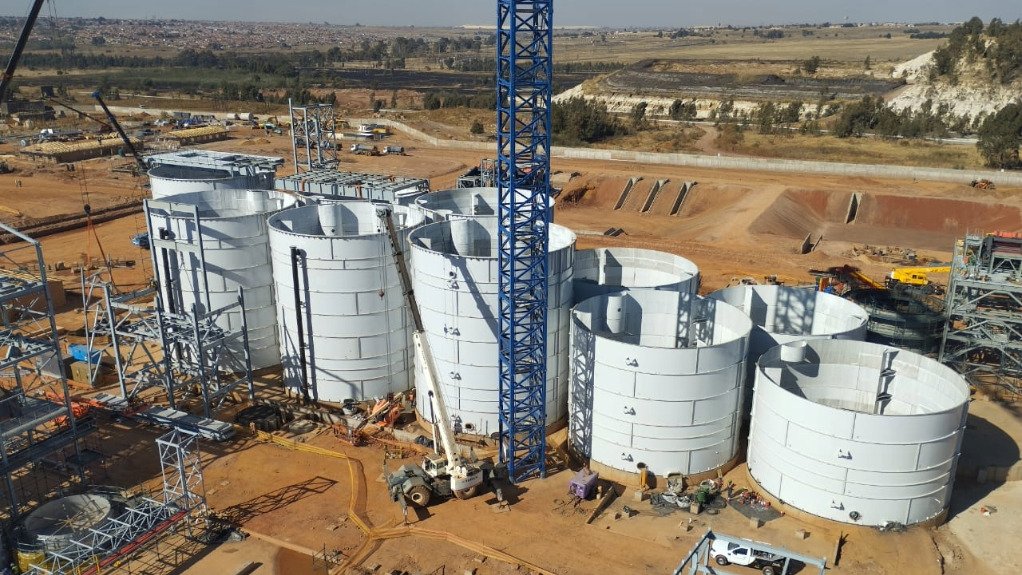
CONDITIONAL OPPORTUNITIES Upcoming infrastructure expenditure presents a potentially significant opportunity for local fabricators, however this is dependent on infrastructure projects procuring from local fabricators


While South Africa’s metal fabrication and metalworking sector is diverse, resilient and robust, it faces significant constraints, compounded by competition from Asian markets, which threaten the sector’s longevity, says industry organisation Southern African Institute of Steel Construction chairperson Nicolette Skjoldhammer.
Significant opportunities were forecasted in the mining and construction sectors at the end of 2025, yet almost midway through the second quarter of 2026, many of those projects have not progressed to execution.
As a result, many fabrication workshops are operating on reduced shifts or remain idle, significantly affecting businesses and their employees.
“There are green shoots on the horizon, but anyone that has run a workshop knows that it is a hungry beast to feed and interrupted workflow can mean the permanent loss of capacity and skills to other sectors,” she adds.
She describes 2026, to date, as being defined by rising costs, with the ongoing conflict in Iran expected to result in even higher raw material prices.
Meanwhile, certain imported raw materials have recently been awarded protection through import duties, yet no reciprocal protection has been extended to the downstream fabrication industry in the form of duties on imported finished goods. As a result, downstream fabricators continue to be exposed to unrestrained competition from imported finished goods at prices that are unfeasible to match.
Additionally, the sector is losing skills to overseas markets that are actively campaigning to attract artisans. The local sector then has to replace these skills, and artisan training often falls to the employer, owing to a lack of reliable trade schools that offer the required training.
Squandering Potential
Upcoming infrastructure expenditure presents a potentially significant opportunity for local fabricators that have the skills and access to locally produced raw materials, including stainless steel, to execute these projects.
However, Skjoldhammer is concerned that senior officials overseeing infrastructure projects often view local supply as too expensive and, as a result, are reluctant to consider local procurement.
This perception is skewed, as prices are sometimes artificially inflated during procurement processes, particularly when various “middlemen” are involved.
“That is lazy or potentially corrupt procurement and does not reflect fairly on the real costs with which South African fabricators must contend,” she adds.
Cost comparison must be fair, she says, elaborating that local fabricators are subject to South African labour law and broad-based black economic-empowerment (BBBEE) requirements.
Moreover, Skjoldhammer also points out that the minimum wage in steel fabrication is close to double that of what is paid in other sectors, compounded by the costs of private security and mandatory BBBEE compliance, as well as rising energy prices, which contribute to making the sector seem exorbitantly expensive to local operations.
Therefore, it is inevitable that local fabricators will be more expensive compared with imported alternatives that are not subject to the same constraints.
She highlights that money spent on such imports leaves the local fiscus, while domestic spending contributes directly to the broader economy.
Meanwhile, the African Continental Free Trade Area (AfCFTA) presented considerable promise when the Steel Master Plan was launched in 2021, but Skjoldhammer says related discussions have since stalled.
Most fabrication businesses are small to medium-sized enterprises that may be unaware of or ill-equipped to leverage the opportunities the agreement presents, she notes.
When projects are funded by international financiers, the project’s preferred suppliers are often determined by the lender. In these circumstances, it is common for fabricators to be excluded before they have the chance to tender, she says.
Another common scenario is that procurement decisions are made by engineering houses or quantity surveyors that are unaware of AfCFTA discussions and assess supply chains on a “straightforward, rand-per-kilo basis”.
“If a project is adjudicated purely on a rand-per-kilo basis, the client may not appreciate the value of a quality product or an innovative solution, such as modularisation, that delivers long-term savings. The project is then lost to imports [from outside Africa],” says Skjoldhammer.
She reiterates that it is near impossible for local fabricators to compete on a rand-per-kilo basis with imported finished goods, forcing local fabricators to rely on a reputation for quality, innovation and ingenuity to demonstrate value to clients.
However, this strategy works only if the fabricator has the opportunity to engage with the end-user, which is not always possible.
All these factors ensure that, without government support and protection for downstream fabricators, the industry will continue to struggle, with local capacity and the skills base continuing to erode, Skjoldhammer warns.
“The downstream industry employs about 25 times more people than the upstream steel production industry. Without conscious intent to grow our local capacity and industry, we will lose the opportunity to upskill our people and keep them employed. When we procure outside of our borders, all that we’ve done is help someone else’s economy grow,” she concludes.
Article Enquiry
Email Article
Save Article
Feedback
To advertise email advertising@creamermedia.co.za or click here
Research Reports
Projects


Latest Multimedia
Latest News
Showroom
CSIR International Convention Centre (CSIR ICC) - the leading conference and events venue in Pretoria/Tshwane.
VISIT SHOWROOM
Supplier & Distributor of the Widest Range of Accurate & Easy-to-Use Alcohol Breathalysers
VISIT SHOWROOM



Announcements
What's On
Subscribe to improve your user experience...
Option 1 (equivalent of R125 a month):
Receive a weekly copy of Creamer Media's Engineering News & Mining Weekly magazine
(print copy for those in South Africa and e-magazine for those outside of South Africa)
Receive daily email newsletters
Access to full search results
Access archive of magazine back copies
Access to Projects in Progress
Access to ONE Research Report of your choice in PDF format
Option 2 (equivalent of R375 a month):
All benefits from Option 1
PLUS
Access to Creamer Media's Research Channel Africa for ALL Research Reports, in PDF format, on various industrial and mining sectors
including Electricity; Water; Energy Transition; Hydrogen; Roads, Rail and Ports; Coal; Gold; Platinum; Battery Metals; etc.
Already a subscriber?
Forgotten your password?
Receive weekly copy of Creamer Media's Engineering News & Mining Weekly magazine (print copy for those in South Africa and e-magazine for those outside of South Africa)
➕
Recieve daily email newsletters
➕
Access to full search results
➕
Access archive of magazine back copies
➕
Access to Projects in Progress
➕
Access to ONE Research Report of your choice in PDF format
RESEARCH CHANNEL AFRICA
R4500 (equivalent of R375 a month)
SUBSCRIBEAll benefits from Option 1
➕
Access to Creamer Media's Research Channel Africa for ALL Research Reports on various industrial and mining sectors, in PDF format, including on:
Electricity
➕
Water
➕
Energy Transition
➕
Hydrogen
➕
Roads, Rail and Ports
➕
Coal
➕
Gold
➕
Platinum
➕
Battery Metals
➕
etc.
Receive all benefits from Option 1 or Option 2 delivered to numerous people at your company
➕
Multiple User names and Passwords for simultaneous log-ins
➕
Intranet integration access to all in your organisation